
Get Email Updates
Subscribe and receive our newsletters to follow the news about our fresh and fantastic products.

By near-universal consensus, Stephen Sondheim was the greatest musical theater composer of his generation—celebrated, among other things, for the wit, sophistication, and intricacy of shows from West Side Story to Sunday in the Park with George. A less well-known avenue for his brilliant creativity was his lifelong fascination with designing and constructing intricate puzzles and games: from treasure hunts and crossword puzzles to parlor and board games.
This month I had the honor of formally kicking off my book tour - pre-launch - as guest presenter at the Sondheim Study Group. This is a series of excerpts from the Q&A that followed. #sondheim #stephensondheim

Remember the Stephen Sondheim estate auctions last year? If, like me, you wished you could have afforded something, here’s a second chance. Dallas antiques dealer and musical theater devotee John Fredette has curated a collection of objects from those Doyle Auctions, featuring Sondheim’s collection of antique board games.
Can’t afford an entire 18th century french game? For many of the items, Fredette has artfully framed individual pieces, such as beautiful designed cards, to sell at more affordable prices.
Prices range from under $75 to over $7500, and every item comes with documentation tying it directly to the collection.
If you’re a fan—or shopping for one—take a look: www.SondheimSelections.com.
Note: This is a paid promotion, via barter (but very much my kind of rabbit hole).
Turn up the sound. Someone shared this remarkable clip with me and does not know where it is from. Do you know? Can you suss it out? Who is Ed? Who took the photo in the last shot? Are there other clues? All Sondheim detectives are invited to help me unravel the mystery. @sondheimletters @sondheimphotos @thesondheimhub @sondheimsociety
And in other news… I direct a Museum. If you love Sondheim maybe you also love seltzer. If so, please check out SeltzerFest.org. Use code SondheimDrankSeltzer for 25% off.
With my book set to launch in September of this year, I’m so excited to be producing this associated podcast series that I hope will launch this summer. But I’m not a very patient person and it is hard to wait to share these amazing conversations with you! So here’s a clip from one of the upcoming episodes. #podcastpreview #sondheim
Okay, I actually only just finished a draft of the first episode. The series won’t even drop until the summer. But I am looking for people NOW who want to preview this first episode and give us feedback. If you’re interested, go to my bio and click on the link at the top. Once you fill out the survey, I will send you the first episode.
This is 40+ minutes sped-up to just over a minute. (Go to bio for link to the YouTube video of my narrating the entire thing...)
From 1994 (Passion) through Company (2021), Stephen Sondheim looked to Stave, a Vermont-based jigsaw manufacturer, to produce personalized puzzles as his opening night gifts.
For each show, the poster was turned into a thick-pieced, deviously complex wooden jigsaw puzzle, each gift personalized with the initials of the recipient designed into the puzzle pieces as an additional challenge and delight.
This puzzle was gifted to Susan Jolles. When I visited her, she was approaching her 85th year--and had just concluded her sixth hour teaching harp to students in her home.
She performed in the orchestra for revivals of both A Little Night Music (2009) and Sunday in the Park with George (2017).
She said of all of her opening night gifts, this is one of her favorites since she`s been doing jigsaw puzzles since she was a kid, and this was personalized.
These puzzles represented Sondheim`s life-long interest in using puzzles to create moments of awe and clarity. I hope some of that comes across in the viewing.
To watch videos of me putting them together, go to the YouTube Playlist link in the bio link. This one was the hardest of the more than two dozen I have done, clocking in at over 40 minutes. Insane!
@stavepuzzles #jigsawpuzzles #jigsaw #jigsawpuzzlesforadults #sondheim #thingsmadeofwood
From 1994 (Passion) through Company (2021), Stephen Sondheim looked to Stave, a Vermont-based jigsaw manufacturer, to produce personalized puzzles as his opening night gifts.
For each show, the poster was turned into a thick-pieced, deviously complex wooden jigsaw puzzle, each gift personalized with the initials of the recipient designed into the puzzle pieces as an additional challenge and delight.
This puzzle was gifted to Susan Jolles. When I visited her, she was approaching her 85th year--and had just concluded her sixth hour teaching harp to students in her home.
She performed in the orchestra for revivals of both A Little Night Music (2009) and Sunday in the Park with George (2017).
She said of all of her opening night gifts, this is one of her favorites since she`s been doing jigsaw puzzles since she was a kid, and this was personalized.
These puzzles represented Sondheim`s life-long interest in using puzzles to create moments of awe and clarity. I hope some of that comes across in the viewing.
To watch videos of me putting them together, go to the YouTube Playlist link in the bio link. This one was the hardest of the more than two dozen I have done, clocking in at over 40 minutes. Insane!
@stavepuzzles #jigsawpuzzles #jigsaw #jigsawpuzzlesforadults #sondheim #thingsmadeofwood
Matching Minds with Sondheim is a journey into this rich but largely unmapped aspect of the composer’s creative life, illuminating how Sondheim’s playful designs delivered moments of clarity and connection for his friends and colleagues. For the first time, this book offers an enthralling tour of what Sondheim described as his “puzzler’s mind,” helping readers to better understand the man, his work, and—if they accept the challenge—themselves.
Gaming expert and theater fan Barry Joseph draws from over eighty years of Sondheim’s activities, collecting his extremely rare and never-publicly-seen puzzles and game designs, scores of original interviews with the celebrity friends who played them, deep dives into Sondheim-related archives from around the country, and analysis from both puzzle designers and theater professionals from around the world.
Matching Minds will do more than describe Sondheim’s work: It will allow readers to match minds with the maestro by attempting to solve Sondheimian puzzles and bring Sondheimian games into their own homes.
Reactions from early readers:
“Matching Minds does justice to a man who was good at having fun. Readers will have an absolute blast with this book.”
“An essential read for anyone who wants to understand what made this creative genius tick.”
Follow the latest on the book at MatchingMindswithSondheim.com and on Instagram.
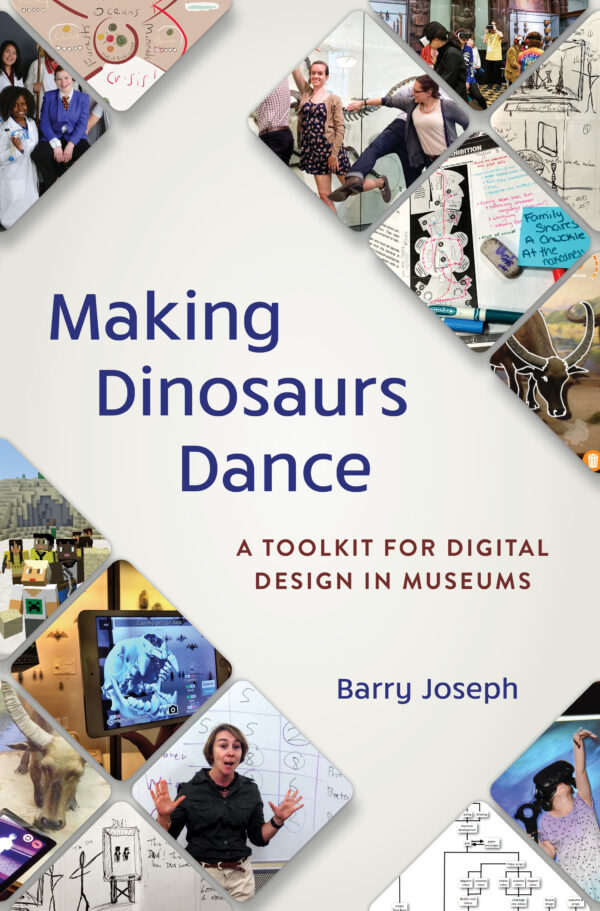
“A wonderful guide to the kind of agile, experimental, responsive operational strategies needed in the museum of the future.” — Elizabeth Merritt, Founding Director, Center for the Future of Museums, American Alliance of Museums
Making Dinosaurs Dance takes the reader behind the scenes to learn how the American Museum of Natural History innovates visitor digital engagement, highlighting design techniques used both there and at museums around the world. Based on my six years at the landmark institution that inspired the Night at the Museum franchise, the book introduces The Six Tools of Digital Design – user research, rapid prototyping, public piloting, iterative design, youth collaboration, and teaming up – then applies them through case studies across a range of topics.
Read more here.
“Stories like Joseph’s suggest we are a lot better than we think we are.” —Micki McElya, author of The Politics of Mourning
“Compulsively readable” —James Loney, columnist
Friday is Tomorrow, or The Dayenu Year is a true story of learning to grieve and thrive during the first year of the COVID-19 Pandemic.
Within the first month of the lock-down, the author loses his father to the disease and then, soon after, his job. Through the support of his family, friends, and community, Friday is Tomorrow tells the uplifting story of how one man learns to maintain traditions in a time of uncertainty while reaching for his dreams.
At times moving, at times humorous, the ups and downs of this New Yorker were originally penned (quite literally, with a physical pen) for Columbia University’s NYC Covid-19 Oral History, Narrative and Memory Archive. Edited together for the first time, Friday is Tomorrow is more than just an opportunity to read one person’s struggle with the world wrought by the recent pandemic.
It is an invitation to take the time and space you need to consider and better understand your own story.
Learn how to get your own copy, download a free sample, and more at FridayisTomorrow.com.
“Of the thousands of books written about seltzer water, this is by far my favorite–especially the part that’s about me.” –Mel Brooks
Based on more than fourteen years of original research and interviews, the extraordinary story of this ordinary drink can finally be told.
Learn where to get your own copy, watch videos of presentations, follow the book tour and more at Seltzertopia.com.
© Copyright 2023 – Barry Joseph


